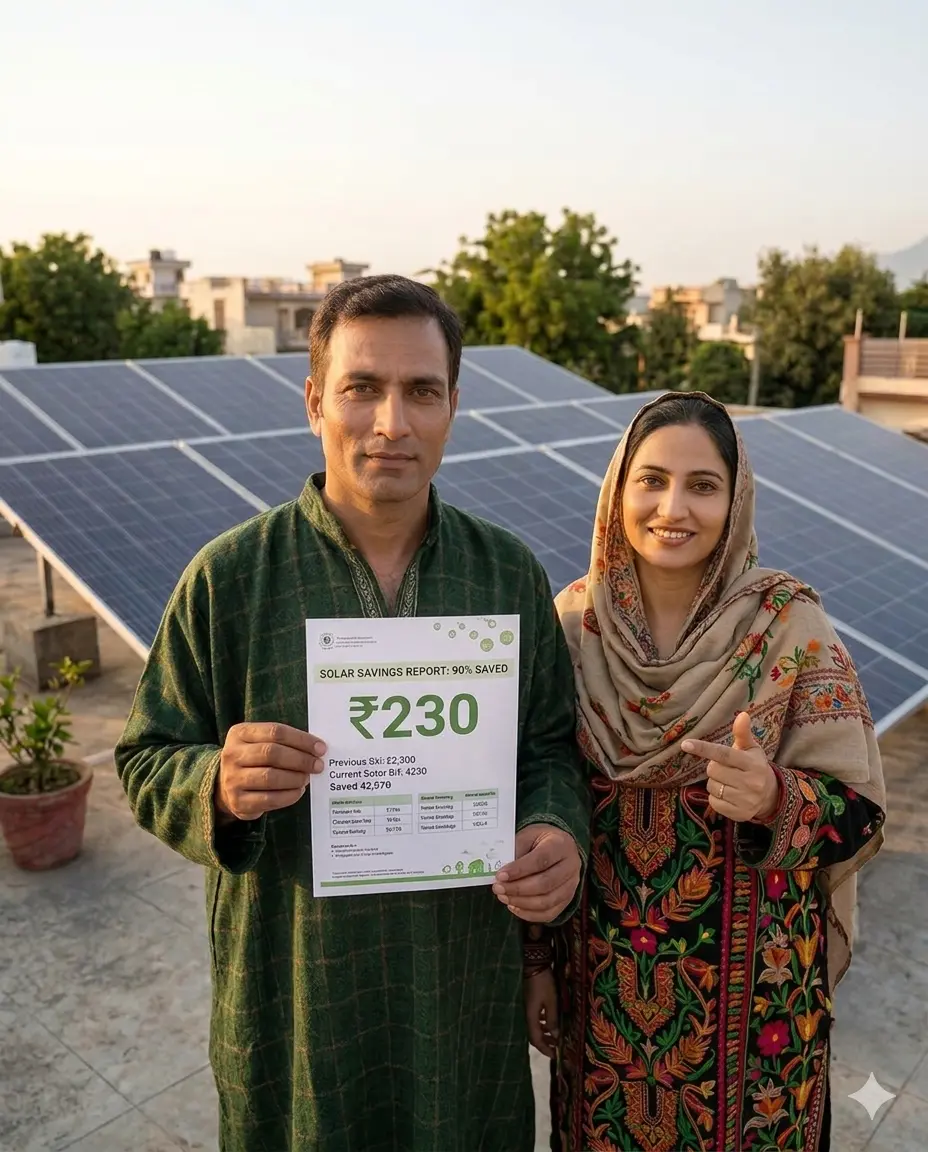
Summer temperatures are rising, and grid electricity bills are breaking household budgets across the country. Every single month, homeowners open their utility statements and look for a way to reduce these massive recurring expenses. The most effective financial solution available right now is installing a rooftop solar system.
However, the initial cost of purchasing panels and inverters is very high. To solve this problem, the government provides a massive solar panel subsidy. This direct financial support drastically lowers the barrier to entry for everyday families. But the rules, the exact payout amounts & the application portals change frequently.
This guide breaks down exactly how the 2026 solar subsidy in India works, who is legally allowed to claim it & the precise steps you need to take to get the money deposited into your bank account.
What is Solar Panel Subsidy?
Many people search online trying to understand the exact meaning of a government solar support package. In simple financial terms a solar panel subsidy is a direct capital grant provided by the state to promote renewable energy adoption.
The government wants to reduce the heavy national reliance on highly polluting coal power plants. To achieve this they need millions of private citizens to generate their own clean electricity. Because buying high quality solar hardware is expensive the government offers to pay a large percentage of your final installation bill.
This is not a complex commercial loan and you do not have to pay the money back. You hire a certified vendor, they install the system on your roof, and the state transfers a fixed cash amount directly into your bank account. This heavily reduces your total out of pocket expense and makes the transition to green energy highly affordable.
Latest Solar Subsidy Scheme in India (2026)
The Ministry of New and Renewable Energy (https://mnre.gov.in/) has entirely restructured its green energy funding for the 2026 financial year. They closed down multiple fragmented regional policies and launched one highly unified national platform.
The primary rooftop solar scheme in India right now is the PM Surya Ghar Muft Bijli Yojana. This specific solar yojana is backed by a massive ₹75,000 crore central budget. Its core objective is to install modern solar infrastructure on 10 million individual residential homes.
The political and economic promise driving this massive Solar Panel Yojana is providing up to 300 units of free electricity every month to standard households. If you are a private homeowner looking to upgrade your property this year, the PM Surya Ghar mandate is the only official government portal you need to use.
PM Surya Ghar Subsidy Details
To plan your budget accurately, you need to understand the exact solar subsidy amount the government is willing to pay. The payout is strictly calculated based on the total kilowatt capacity of your new system. The standard national rates are set clearly by the central government.
For a basic 1kW installation, the standard national subsidy is exactly ₹30,000. If you install a 2kW system, the state provides ₹60,000. For a 3kW system, the grant hits the national maximum limit of ₹78,000.
However, there is a very important regional exception. The government provides significantly higher payouts for special category states and hilly regions like Jammu and Kashmir. Because transporting heavy equipment across steep terrain is highly expensive, the subsidy per kW in India increases for these specific areas. In J&K, a 1kW system secures ₹36,000. A 2kW system secures ₹72,000. For any system sized 3kW and above, the maximum regional subsidy is pushed aggressively to ₹94,800.
Solar Subsidy Calculation (Real Example)
Let us look at a real financial example to understand the exact solar panel price after subsidy. We will use the official approved pricing for a standard 3kW solar installation in a special category region like Srinagar.
The current market price for a high quality 3kW plant installed by an authorized regional dealer like Volton is roughly ₹1,59,500. This includes the tier one panels, the inverter, the mounting structure & the physical labour.
The Math:
- Total System Cost: ₹1,59,500
- Minus Maximum Government Subsidy (J&K Rate): ₹94,800
- Your Final Net Price: ₹64,700
Instead of paying nearly 1.6 lakh rupees, your actual out of pocket expense drops to just ₹64,700. For this final balance, major nationalised banks like J&K Bank and SBI offer highly attractive solar loans starting around 7 percent interest. Your new monthly loan payment will likely be much lower than your old electricity bill.
Who is Eligible for Solar Subsidy?
The residential solar eligibility rules are very strict to prevent corporate abuse of the residential fund.
First, the applicant must be a citizen of India. You must strictly be the legal homeowner of the property where the system is being installed. Renters cannot claim this money unless the actual landlord applies directly.
Secondly, the property must have a valid, fully active grid connection from a recognised local electricity distribution company. You also need a clear, structurally safe roof space. Finally, the primary applicant must hold an active bank account linked directly to their Aadhaar card to receive the digital cash transfer. Commercial buildings and large industrial factories are entirely excluded from this specific consumer scheme.
Documents Required for Solar Subsidy
Failing to upload the correct paperwork will instantly freeze your application. Gather these exact solar apply documents before you start the online process:
- A clear copy of your Aadhaar Card for identity verification.
- The latest official electricity bill generated within the last 60 days.
- A cancelled cheque or a clear copy of your bank passbook.
- Recent passport size photographs of the applicant.
- Valid property ownership proof or the latest municipal house tax receipt.
How to Apply for Solar Panel Subsidy (Step-by-Step)
The PM Surya Ghar application process is now completely digital. You must follow these exact steps to secure your rooftop solar approval and funding.
- Open your web browser and navigate strictly to the official national portal at pmsuryaghar.gov.in.
- Register your basic consumer profile by selecting your specific state, your local electricity distribution company, and entering your exact consumer account number. https://pmsuryaghar.gov.in/consumerRegistration
- Log into the portal using your registered mobile number and fill out the formal rooftop solar application form.
- Wait for the official feasibility approval from your local electricity board. This takes roughly a week.
- Once approved, select a certified installation vendor directly from the official portal database.
- After the physical installation is complete, submit the final plant details online and formally apply for the net meter installation.
- Local grid officials will inspect the physical setup. If it passes safety checks, they will generate an official commissioning certificate.
- Submit your final bank account details and the commissioning certificate on the portal to trigger the direct cash transfer.
Solar Panel Cost After Subsidy
Understanding the rooftop solar cost after subsidy helps you decide exactly what size system your household actually needs. Based on current authorized dealer pricing in special category regions, here is what you can expect to pay out of pocket.
- 1kW System: The total invoice is roughly ₹55,000. The government provides ₹36,000. Your final net price is just ₹19,000. This size easily covers basic lighting and ceiling fans.
- 2kW System: The total invoice is roughly ₹1,10,000. The government provides ₹72,000. Your final net price is just ₹38,000. This comfortably runs a standard home with multiple appliances.
- 3kW System: The total invoice is roughly ₹1,59,500. The government provides the maximum ₹94,800. Your final net price is just ₹64,700. This size generates 250 to 350 units a month, easily supporting an air conditioner during the summer.
Benefits of Solar Panel Subsidy
The primary benefit is massive financial relief. You completely eliminate the heavy summer cooling bills that constantly drain your monthly income.
When you factor in the heavy government grant, the pure ROI on solar panels is incredibly fast. The physical system typically pays for itself entirely in just 3 to 4 years. Because standard solar panels are guaranteed to perform for 25 years, you are effectively securing over two decades of completely free electricity.
Furthermore, through the net metering system, any excess power you generate during sunny days is sent directly back to the main grid. Your local electricity board tracks this and credits your account. This effectively allows your roof to generate a small passive income during the cooler winter months.
Common Mistakes to Avoid
Thousands of eager homeowners experience brutal subsidy rejection every single month due to basic administrative errors.
The biggest solar yojana mistake is hiring an unregistered local electrician. You will instantly lose your legal right to the massive cash grant if your chosen installation vendor is not officially listed on the national portal. Another highly common error involves banking details. The exact name printed on your active bank account must perfectly match the name printed on the original electricity bill. The automated government system will instantly block your payment if these two names do not align perfectly.
You will instantly lose your legal right to the massive cash grant if your chosen installation vendor is not officially listed on the national portal. If you are based in the Kashmir valley, working strictly with approved and verified installers like Volton Solar Energy ensures your application actually clears the strict government audit on the very first try.
Beware of Fake Solar Subsidy Schemes
We must address a massive solar scam in India currently circulating on social media. You have likely seen advertisements promoting a completely free solar panel yojana. This is 100 percent fake news.
The government absolutely does not send technicians to install free hardware on your roof. There is no legitimate scheme where the physical panels and the inverter are handed out for zero rupees. You are legally required to pay the capital cost to a registered vendor first. The government only provides its fixed cash grant after the system is fully operational. These fake adverts are usually phishing scams designed to steal your bank details.
FAQs
How much subsidy can I get on solar panels in 2026?
The standard national grant is ₹30,000 for 1kW, ₹60,000 for 2kW, and a maximum of ₹78,000 for 3kW and above. Special category regions like J&K receive up to ₹94,800.
Who is eligible for solar panel subsidy in India?
Indian citizens who legally own a residential property with a clear roof space and an active grid electricity connection.
How can I apply for a solar subsidy?
You must apply strictly online through the official national portal located at pmsuryaghar.gov.in.
How long does it take to get a solar subsidy?
Once the plant is officially commissioned and the net meter is installed, the cash is typically deposited into your bank account within 30 days.
Can I get a solar subsidy for commercial use?
No. The PM Surya Ghar mandate is strictly reserved for individual residential households. Commercial properties are excluded.
Is there any free solar panel government scheme?
No. Claims of 100 percent free installations are total financial scams. You must pay a certified vendor first and claim the state grant later.
How much does solar cost after subsidy?
Depending on your region, a 3kW system typically costs roughly ₹1,60,000. After applying the maximum state grant, your final out of pocket expense drops to around ₹65,000 to ₹82,000.
Need Help in Solar Panel Installation?
Get expert consultation, subsidy assistance, and end-to-end solar installation services tailored for high-altitude regions. Reduce your electricity bills and ensure reliable power in every season.
Free site survey | Government subsidy support | Fast installation