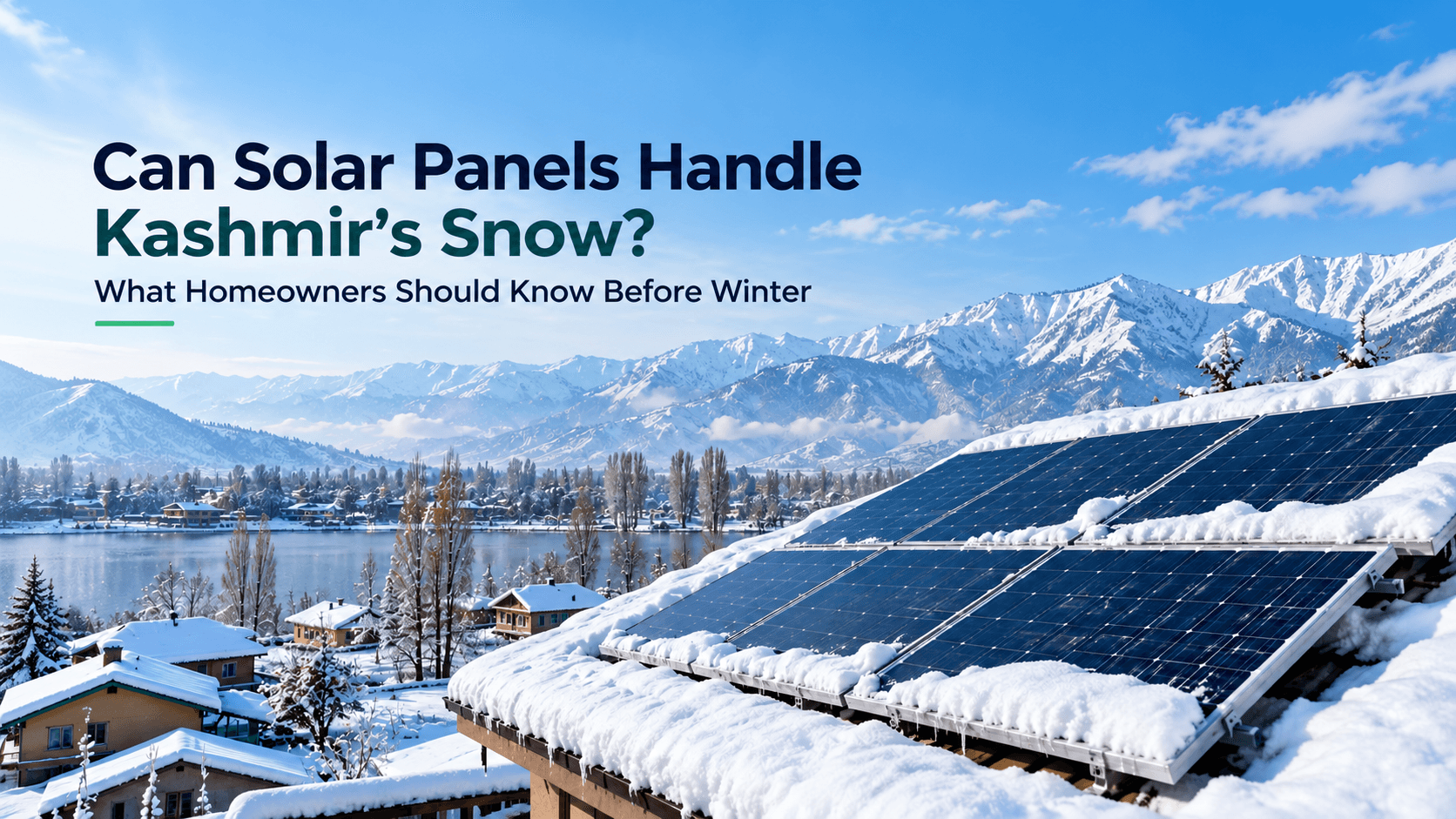
Solar panels can work during Kashmir’s winter, provided the roof and mounting system are suitable for local snow conditions. However, snowfall, shorter daylight hours and cloudy weather can reduce electricity generation. For homeowners in Srinagar and across Jammu & Kashmir, understanding these factors before installation helps set realistic expectations and prepare for the colder months.
Can Solar Panels Withstand Heavy Snowfall in Kashmir?
Solar panels can operate in cold, snowy conditions when the complete installation is designed for the property’s structural requirements and local weather. However, not every panel or mounting arrangement is suitable for every roof or snowfall condition.
Before installing rooftop solar panels, homeowners should consider four important factors:
- Panel load ratings: Check the manufacturer’s technical specifications for the panel’s rated mechanical load and suitability for expected conditions.
- Mounting structure: The supporting frame, fasteners and roof attachments must be appropriate for anticipated snow and wind loads.
- Roof strength: A qualified professional should assess whether the roof can safely support the proposed installation.
- Panel angle and placement: The mounting angle affects how snow accumulates or slides off. The design should also consider where falling snow could land.
The panels alone do not determine whether a solar system can handle snowfall. Roof condition, mounting design and installation quality are equally important.
How Does Snow Affect Solar Panel Performance?
Solar panels use photovoltaic technology to convert sunlight into electricity. When snow covers their surface, less sunlight reaches the solar cells, which can reduce electricity generation. Light snow may melt or slide away as conditions change, while heavier accumulation can block much of the available sunlight.
Winter generation also depends on:
- Daylight hours and cloud cover.
- Panel direction, tilt and surrounding shade.
- The amount of snow remaining on the panels.
- The condition of the panels and electrical equipment.
These factors explain why solar generation can vary between properties, even when their systems have the same installed capacity.
How Much Electricity Can Solar Panels Generate in Srinagar During Winter?
A seasonal estimate can help homeowners understand what to discuss with their solar installer, but it should not be treated as a guaranteed result.
ProfileSolar, a solar PV potential database that uses solar and meteorological data from NASA POWER, lists estimated average winter generation for Srinagar at approximately 3.67 kWh per day per kW of installed capacity. Its published recommendation for the location is a south-facing installation tilted at around 30°.
For illustration, applying this estimate to a 3 kW system gives approximately 11 kWh per day. This is a calculation based on the published estimate, not measured output from a Volton Solar Energy installation.
Actual generation can differ depending on roof orientation, shading, system design, local weather and how long snow remains on the panels. This figure is an indicative planning reference, not a promise of performance for an individual home.
Before installing a system, ask your provider for a property-specific estimate that accounts for seasonal conditions.
Source: ProfileSolar – Solar PV Potential by Country
For general rooftop solar guidance in Kashmir, homeowners can also consult Kashmir Power Distribution Corporation Limited (KPDCL).
How Can Homeowners Prepare Solar Panels Before Winter?
A pre-winter inspection can help identify installation or maintenance issues before heavy snowfall begins. If you already have a rooftop solar system, consider these steps:
- Arrange an inspection: Ask a qualified solar professional to check the panels, mounting structure, visible wiring and electrical equipment.
- Review the installation design: Confirm that the mounting arrangements are appropriate for expected snowfall and wind conditions.
- Check the monitoring system: Learn how to review electricity generation through your monitoring app or display, if available.
- Plan your electricity needs: Consider how your household’s demand may change during winter and what arrangements are available if solar generation decreases.
- Check snow-clearance areas: Snow sliding from elevated panels can create hazards near entrances, walkways and frequently used areas.
If you are planning a new installation, discuss these points with your provider during the site assessment rather than waiting until winter.
Should You Remove Snow From Solar Panels?
Snow should be handled carefully to avoid damaging the panels or creating a safety risk. Climbing onto a slippery roof or scraping the glass with hard tools can cause injury or equipment damage.
Follow these precautions:
- Allow light snow to melt or slide away naturally when conditions permit.
- Avoid metal scrapers, sharp tools and harsh cleaning chemicals.
- Never walk on solar panels or climb onto a snow-covered roof.
- Do not attempt to remove heavy snow or ice if doing so would put you at risk.
- Contact a qualified professional if snow remains for an extended period or you notice visible damage.
Always follow the equipment manufacturer’s maintenance guidance. If you are unsure how to handle snow accumulation, seek professional advice.
Do Solar Panels Work During Power Cuts?
A standard grid-connected solar system generally shuts down during a grid power cut as a safety measure. Therefore, having rooftop solar panels does not automatically mean your home will receive electricity during an outage.
If you need backup power, discuss a suitably configured hybrid system or another compatible backup arrangement with your installer. Depending on the design, this may involve batteries and equipment capable of safely supplying selected household circuits when the grid is unavailable.
Before choosing a system, explain which appliances you need to run during an outage and for how long. This will help your provider assess the appropriate configuration and capacity.
What Should You Ask a Solar Installer Before Winter?
Whether you are installing solar panels for a home, shop or office, ask your provider:
- Are the proposed panels and mounting structure suitable for the expected snow and wind loads at my property?
- Has the roof been assessed for the planned installation?
- What seasonal electricity generation is expected, and what assumptions support the estimate?
- How should snow and ice be handled safely?
- What backup options are available during power cuts?
- What warranties, maintenance arrangements and after-sales support apply?
Clear answers help you understand the system’s limitations, expected performance and ongoing requirements before committing to an installation.
How Does Volton Solar Energy Assess a Solar Installation in Kashmir?
At Volton Solar Energy, the installation planning process begins with understanding the customer’s energy requirements, site conditions and budget. The assessment includes reviewing sunlight exposure, roof structure and electricity needs to help determine a suitable solar system for the property.
For homeowners in Srinagar and across Jammu & Kashmir, the assessment should address the following property-specific considerations:
- Roof suitability: Whether the roof can safely support the proposed installation.
- Snow and wind conditions: Whether the panels, mounting structure and roof attachments are appropriate for the expected local conditions.
- Sunlight exposure: How roof direction, tilt and nearby shading may affect electricity generation.
- Energy requirements: How much electricity the household uses and whether backup power is needed during grid outages.
- System design: Which equipment and mounting arrangements are appropriate for the property.
Volton Solar Energy provides solar installation assistance and customer support. Before proceeding, confirm the warranty terms, maintenance arrangements, service response process and after-sales support coverage applicable to your project.
A property-specific assessment is more useful than relying on general performance figures because roof conditions and winter exposure vary from one home to another.
Explore our residential solar solutions to learn more about solar options for homes in Jammu & Kashmir.
Is Solar Energy a Practical Choice for Homes in Kashmir?
Solar energy can be an option for homes and businesses in Kashmir, but suitability depends on the property, electricity requirements, installation design and seasonal conditions. Snowfall does not automatically rule out rooftop solar; it makes careful planning and realistic expectations particularly important.
Before installing a system, review the roof’s suitability, equipment specifications, estimated seasonal generation and backup requirements. A qualified assessment can help you understand what the proposed system is designed to handle and how it may perform throughout the year.
Discuss Your Solar Requirements With Volton Solar Energy
If you are considering rooftop solar or want to prepare an existing installation for winter, contact Volton Solar Energy to discuss your property’s conditions, system requirements and available support.
Visit our contact page to get in touch with the team and discuss your installation requirements.