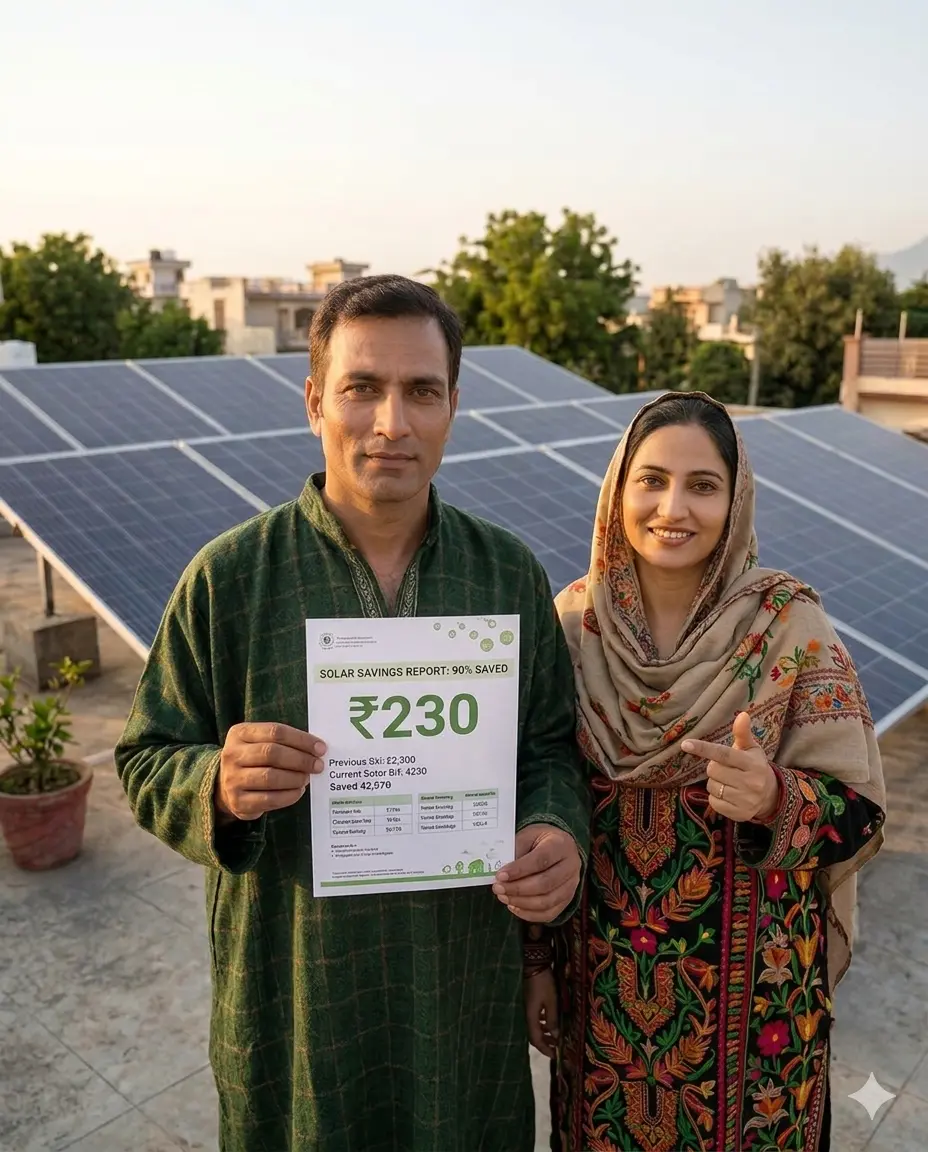
Solar panels are actively marketed as a completely passive financial asset. The sales pitch is always the same. You install the heavy hardware on your roof, connect the inverter to your local utility grid, and watch your monthly electricity bills permanently disappear.
However, treating a highly sophisticated rooftop power plant as a completely maintenance free installation is a massive financial error. Your panels are constantly exposed to the harshest environmental elements all year round.
Over time, the local environment aggressively attacks the tempered glass protecting your delicate silicon cells.
If you ignore physical maintenance, you are directly sacrificing your daily power generation and throwing away the lucrative financial returns you were promised. A thick layer of urban dust, heavy industrial pollution, and acidic bird droppings acts like a dark physical blanket.
This barrier directly blocks the sun and instantly drops your daily electricity output. Learning exactly how to clean solar panels is the single most critical operational skill you need to secure your 25 year return on investment.
This comprehensive guide covers the exact financial impact of dirty hardware, the mandatory cleaning tools you need, and the strict physical protocols required to execute the job safely.
The Financial Reality: Why Cleaning is Mandatory
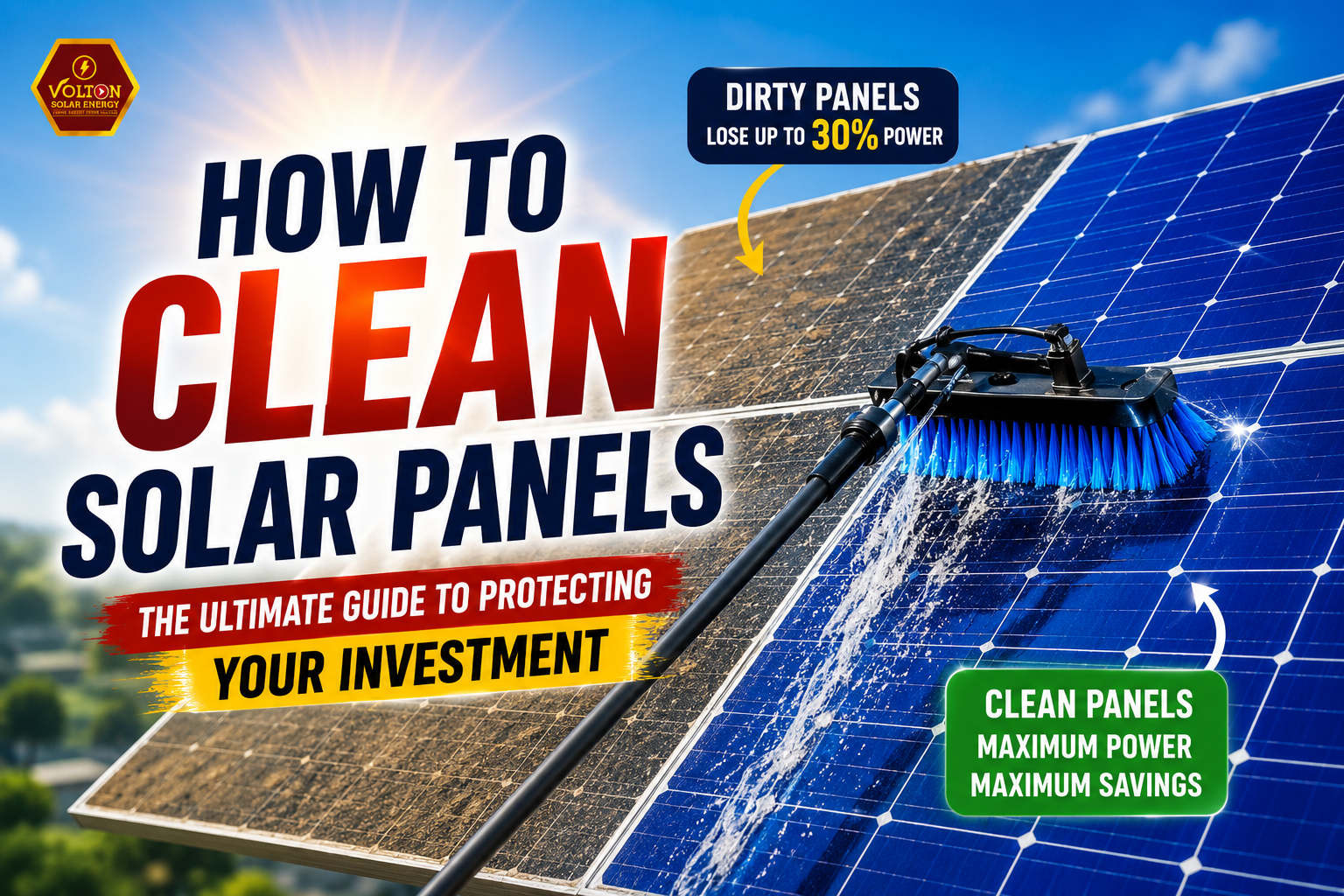
The financial math behind routine physical maintenance is completely undeniable. You must treat your solar array exactly like a high performance vehicle engine. When you neglect it, the output drops significantly. Industry data and field research clearly show that heavily soiled panels can lose up to 30 percent of their total energy yield.
Let us look at a real world mathematical example. If you have a standard 5kW residential system designed to generate roughly 600 units of electricity per month, a 30 percent efficiency drop means you are instantly losing 180 units.
If your local state electricity board charges 8 rupees per unit, that dirt layer is directly costing you nearly 1400 rupees every single month. Over the course of an entire year, you are bleeding thousands of rupees simply because you refuse to wash the glass.
This directly destroys your projected return on investment. The entire purpose of buying solar panels is to drop your grid dependency to absolute zero.
If your dirty system fails to produce enough power to run your household, you are suddenly forced to buy expensive electricity directly from the state grid again.
Routine cleaning keeps your power generation maxed out and ensures your monthly bills stay permanently locked at zero.
The Technical Impact of Partial Shading
To truly understand why you must clean your panels, you need to understand the basic electrical engineering behind the system. Most standard residential solar plants use string inverters.
This means the panels are wired together in a continuous series, much like old fashioned holiday string lights.
Because of this specific electrical wiring, your entire system will only perform as well as the absolute weakest panel in the chain. If just one single panel is heavily covered in thick bird droppings or sticky tree sap, the electrical resistance of that specific module spikes.
This bottleneck instantly drags down the total power output of the entire string. You do not need the entire roof to be filthy to lose money.
A single localized patch of heavy dirt can severely cripple your daily energy production. Keeping every single inch of the glass completely clear is mandatory for optimal grid export.
Environmental Factors: What is Blocking Your Power?
Different geographic regions face entirely different environmental threats. You must identify exactly what is accumulating on your roof to choose the correct cleaning strategy.
Urban Smog and Industrial Pollution: If you live in a heavily populated metropolitan area, your panels are constantly bombarded by exhaust fumes and industrial smoke. This creates a highly sticky, oily film on the glass that completely traps secondary dust.
Agricultural Dust: Homes located near massive farming operations face severe dust accumulation. Seasonal plowing and harvesting kick up microscopic dirt particles that settle heavily on flat rooftop surfaces, completely blinding the solar cells.
Bird Droppings: This is the most dangerous environmental hazard. Bird droppings are highly acidic. If you leave them baking on the glass under the hot summer sun, the acid will literally etch into the anti reflective coating, causing permanent physical damage that no amount of washing can fix.
Pollen and Tree Sap: Properties surrounded by heavy forests deal with seasonal pollen storms and dripping tree sap. Sap acts like an industrial glue, hardening on the glass and trapping layers of thick dirt over the cells.
The Rainwater Myth Debunked
Thousands of eager homeowners believe that heavy seasonal rain is an adequate substitute for manual cleaning. This is entirely false. Rainwater is not pure. As rain falls through the atmosphere, it aggressively collects airborne dust, microscopic pollution, and heavy smog.
When this dirty water hits your hot solar panels, the liquid quickly evaporates, leaving behind a thick residue of brown dust. Think about the windshield of your car after a light rainstorm. It looks significantly worse than it did before the rain started.
You always have to use your wiper blades to actually clear the glass. Your rooftop solar panels operate on the exact same physical principle. You must apply manual physical agitation to truly remove the dirt barrier.
The Ultimate Solar Cleaning Toolkit
You cannot simply climb up to your roof with a rough household mop and a bucket of chemical dish soap. The tempered glass on your hardware features a highly sensitive anti reflective chemical coating specifically engineered to capture maximum sunlight. Using abrasive tools will permanently ruin this delicate layer. You must invest in a dedicated, professional grade toolkit.
Deionized Water
This is the absolute most important component. You must never use hard tap water. Standard municipal water is loaded with heavy calcium and magnesium minerals. When tap water evaporates on your panels, it leaves behind thick white mineral deposits that block the sun just as badly as the original dirt.
Deionized water has all minerals completely stripped out, ensuring a perfectly spotless finish.
Water Fed Extension Pole
You need a highly rigid, lightweight carbon fiber or aluminum extension pole that allows water to pump directly through the center. This allows you to clean massive arrays while safely standing at the edge of the roof.
Soft Bristle Brush
The brush head must feature incredibly soft, non abrasive bristles. Stiff nylon brooms will leave millions of micro scratches across the glass, permanently reducing the light absorption capability of the panel.
Professional Squeegee
A wide, high quality rubber squeegee is strictly required to manually pull excess water off the panels before it has a chance to evaporate and attract new dust.
The Dangerous Don’ts of Panel Maintenance
Avoiding bad cleaning habits is just as critical as the actual cleaning process. These are the catastrophic mistakes that will completely destroy your expensive hardware.
Never Use a Pressure Washer
This is the fastest way to ruin your investment. High pressure water jets will literally blast past the heavy rubber weather seals located at the edges of the aluminum frames. Once water enters the internal lamination, it will instantly short circuit the internal electronics and cause total panel failure.
Avoid Abrasive Chemicals
Never use bleach, ammonia, or heavy industrial detergents. These aggressive chemicals will completely strip the anti reflective coating off the glass and degrade the rubber weatherproofing seals.
Beware of Thermal Shock
Never spray freezing cold water onto panels that have been baking in the hot afternoon sun. The extreme temperature difference will cause the expanded tempered glass to contract violently. The glass will shatter instantly into thousands of pieces, completely voiding your 25 year manufacturer warranty.
Step by Step Guide: How to Clean Solar Panels on Roof
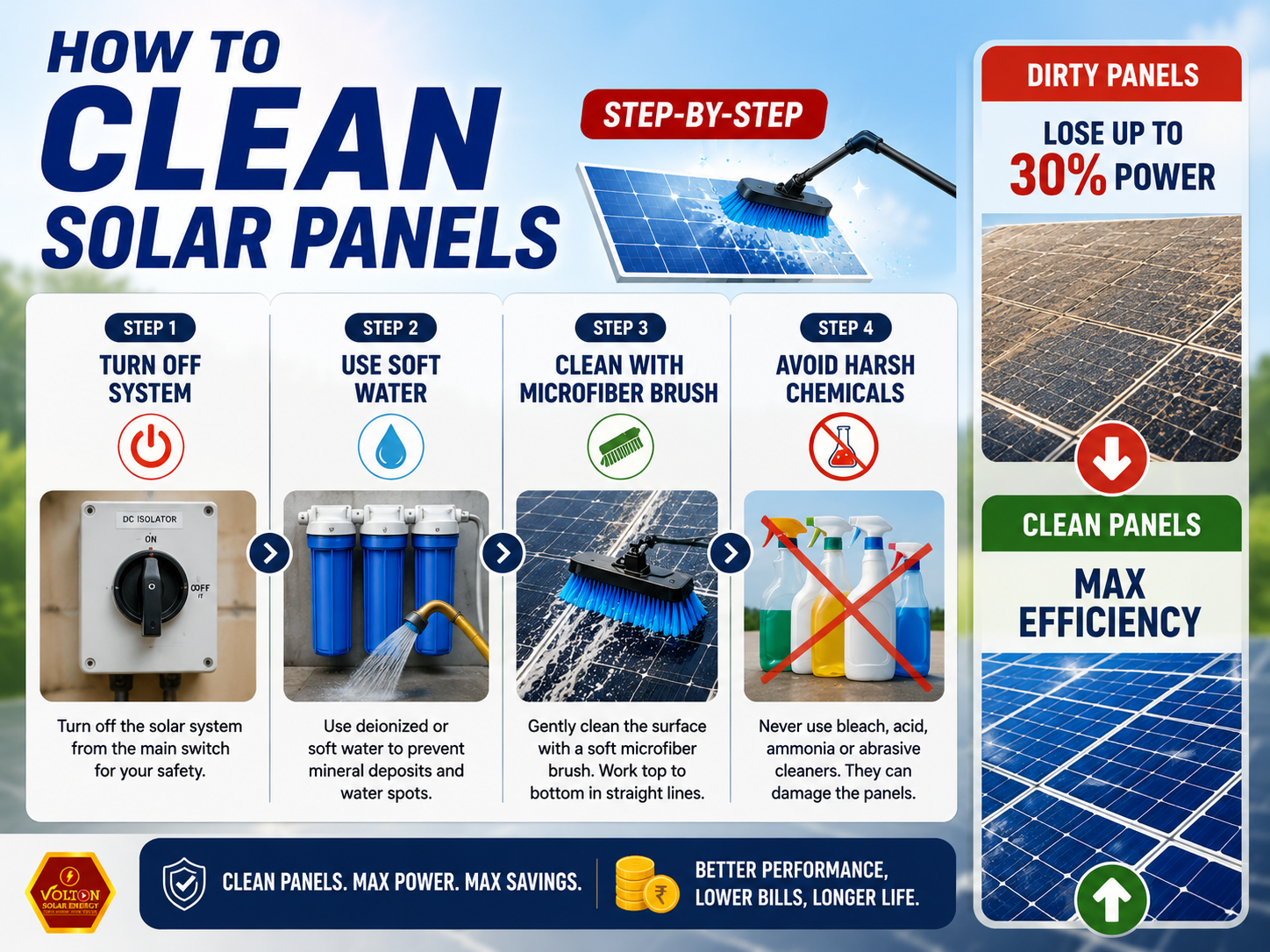
Executing the physical maintenance requires strict operational discipline. Follow this exact sequence to ensure maximum efficiency and total physical safety.
Step 1: Timing the Operation
You must strictly execute your maintenance at dawn or very late in the evening. The glass must be cool to the physical touch before you apply any water to prevent thermal shock.
Step 2: Securing Physical Safety
Keep your feet off the actual roof tiles whenever possible. Use your extended water fed pole from a highly stable, professionally secured ladder. If you must walk on the roof, wear specialized non-slip roofing shoes and secure a heavy duty safety harness to a structural anchor point.
Step 3: The Initial Low Pressure Rinse
Begin by using a standard garden hose to lightly spray down the entire solar array from the top edge downward. The goal here is not to clean, but to simply soften the baked on bird droppings and loosen the heavy surface dust.
Step 4: The Soft Agitation Process
Connect your pure deionized water source to your water fed pole. Gently glide the soft bristle brush across the surface of the glass in smooth, overlapping horizontal strokes. Do not apply heavy downward pressure. Let the soft bristles and the flowing water do the actual work. Pay special attention to the bottom edges of the aluminum frames where dirt naturally pools and hardens.
Step 5: The Final Squeegee and Drying Phase
Once the dirt is fully agitated and rinsed away, switch to your rubber squeegee. Start at the absolute top corner of the highest panel and pull the water straight down. Wipe the rubber blade with a clean microfiber cloth after every single pass to avoid dragging dirt back onto the clean glass.
Conducting a Visual Health Inspection
While you are up there cleaning, you must actively act as the primary physical inspector for your power plant. Look closely at the tempered glass for microscopic cracks or heavy localized discoloration, which could indicate a burnt out internal cell.
Check the heavy aluminum mounting frames to ensure no structural bolts have vibrated loose during recent high wind storms. Finally, visually inspect the thick DC wiring running underneath the panels.
If you spot exposed copper wire, heavy corrosion on the connectors, or clear signs of rodent chewing damage, stop washing the system immediately. Climb down and call a certified solar electrician to repair the dangerous fault.
When to Hire Professional Solar Cleaners
Protecting your renewable energy investment should never come at the cost of your personal physical safety. Sometimes the smartest financial decision is outsourcing the manual labor entirely.
If your residential property is three stories high, or if your roof pitch is extremely steep and dangerous to navigate, climbing up there with a heavy wet hose is a massive physical liability. Professional solar maintenance crews possess the correct industrial safety harnesses, dedicated deionized water filtration trucks, and extended carbon fiber poles to handle the job flawlessly from the ground or a secure lift.
Paying a small seasonal cleaning fee is an excellent, low cost insurance policy compared to dealing with a severe physical injury or accidentally breaking a highly expensive solar panel.
Choosing Volton Solar Energy not only protects your safety but also guarantees proper installation support, transparent costing, and complete assistance with government subsidy approvals.
Conclusion
Your rooftop solar array is a heavy capital investment deliberately engineered to generate highly lucrative free cash flow for over two decades.
Taking a single hour every few months to properly wash the glass guarantees your localized power plant operates at absolute maximum capacity. Equip yourself with the right non abrasive tools, strictly avoid dangerous thermal shock, and conduct regular physical inspections.
By taking total ownership of your system maintenance, you actively protect your hardware from permanent degradation and ensure your monthly grid electricity bills permanently vanish.
Need Help with Solar? We’re Here for You
Get FREE help for installation, cleaning, subsidy guidance, or any solar queries — talk to our expert team and get the right advice today.